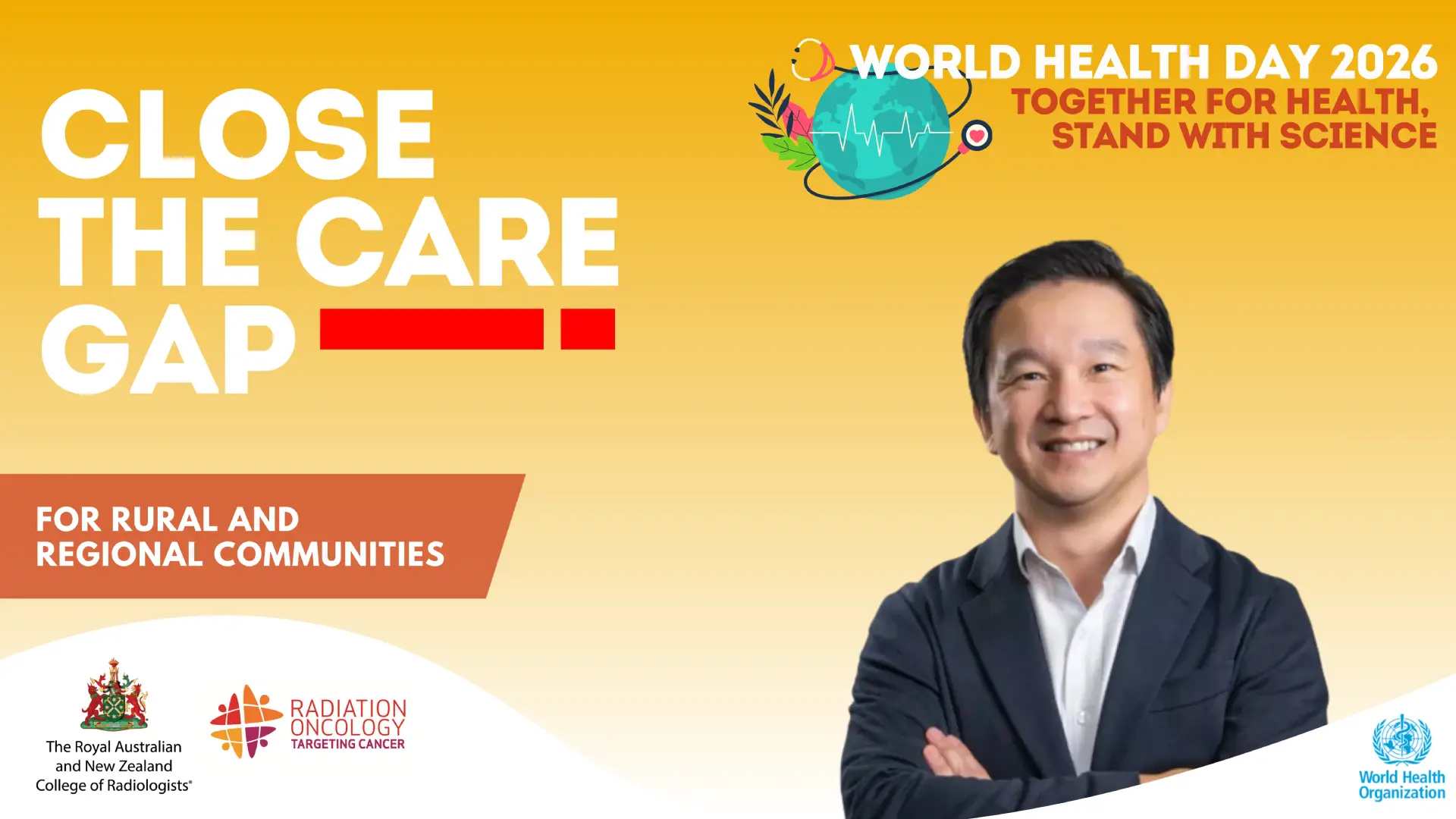
On this World Health Day, a day that commemorates the founding of the World Health Organization (WHO) in 1948, we’re acknowledging the importance of universal access to healthcare, particularly access to radiation therapy for cancer care.
According to WHO, universal health coverage is the key to creating resilient societies and means addressing the barriers for communities’ accessing the full spectrum of essential health services — from prevention to diagnosis and treatment.
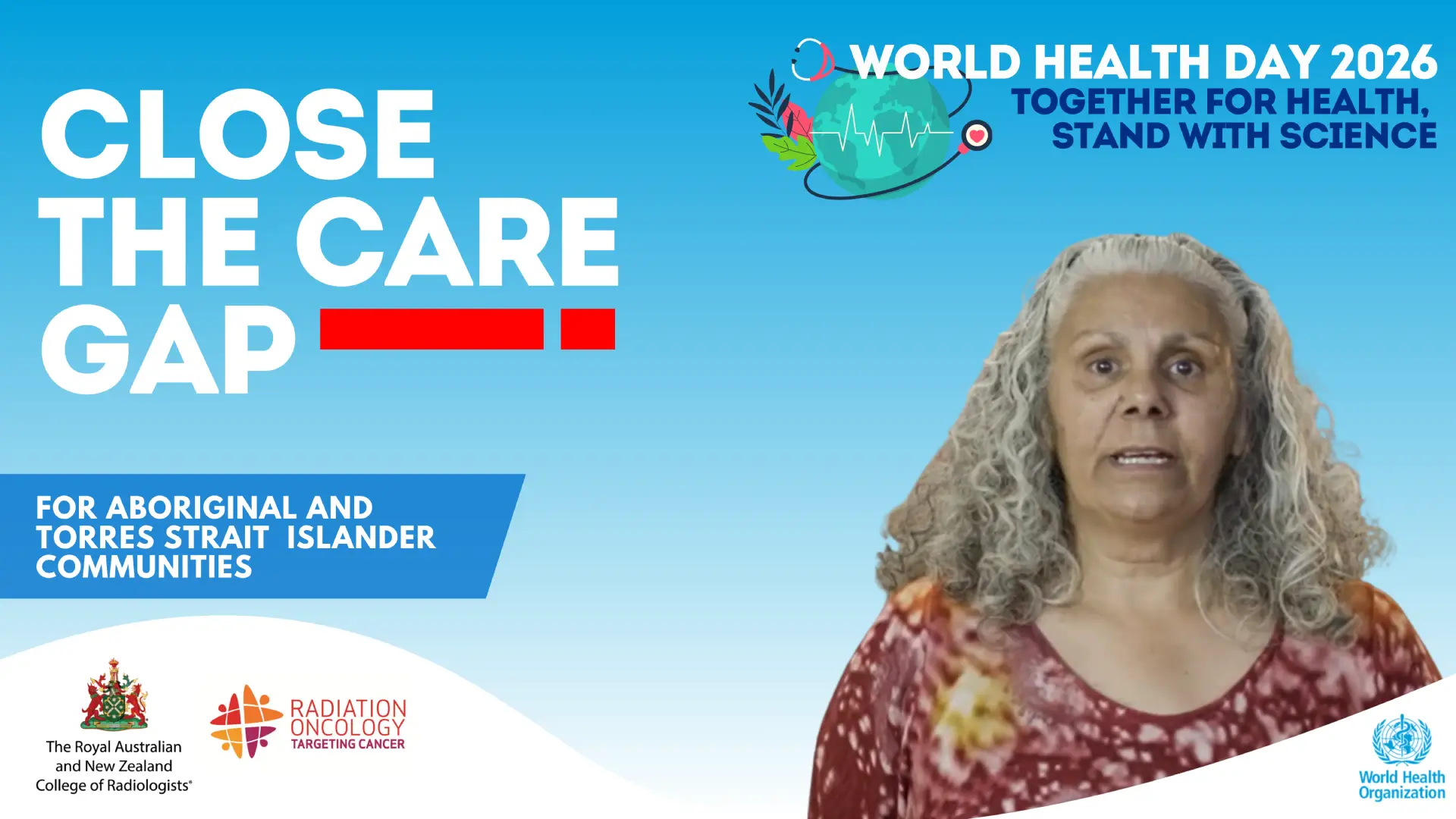
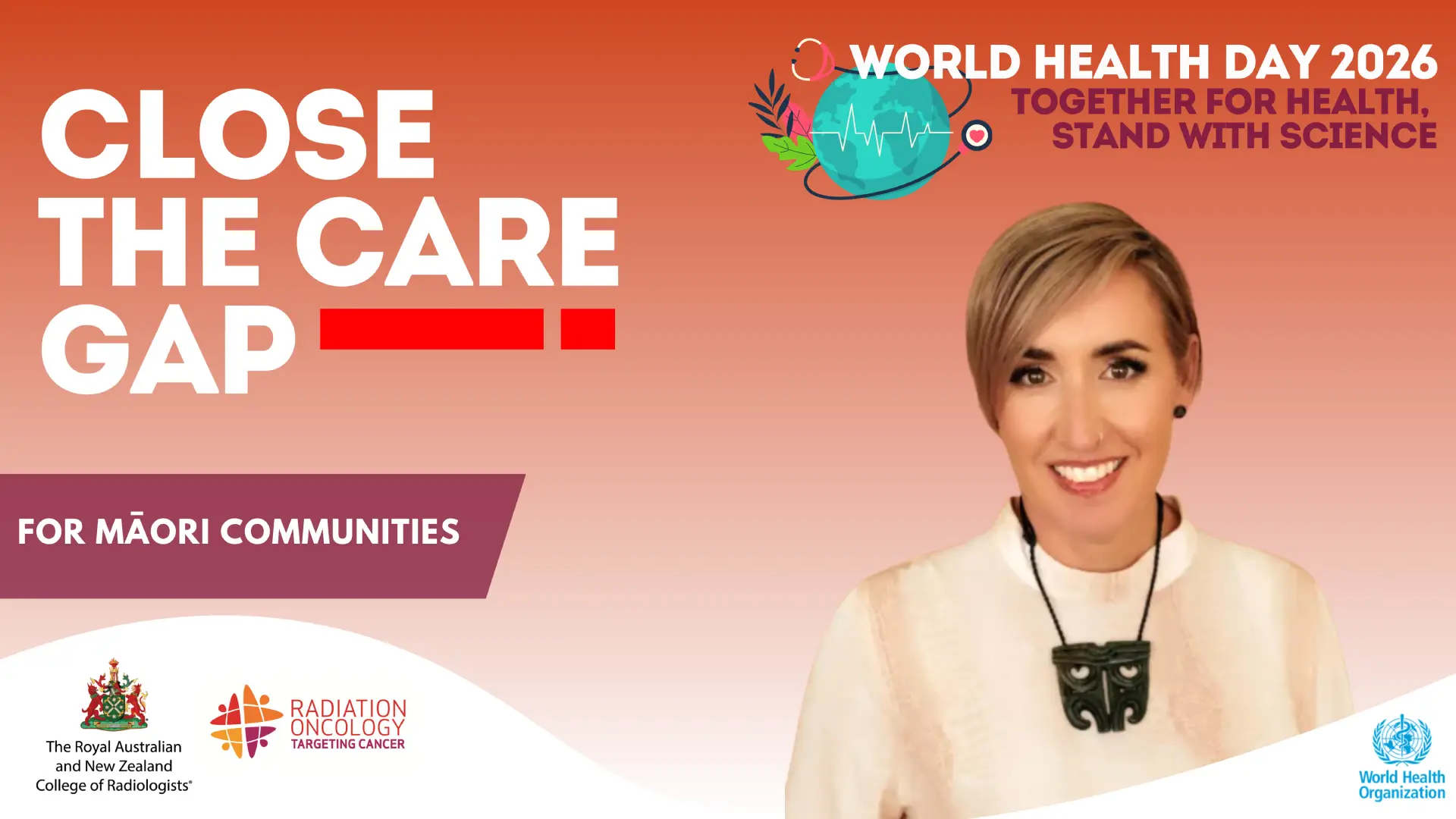
Today, Targeting Cancer’s Close the Care Gap campaign recognises the significant barriers to accessing radiation therapy services often experienced by Aboriginal and Torres Strait Islander communities, Māori communities and those living in rural and regional areas throughout Australia and New Zealand.
Hear from a Specialist Project Officer working in Aboriginal Health in SA, a Māori Clinical Nurse Specialist, and Radiation Oncologist and Dean of the Faculty of Radiation Oncology, Dr Tuan Ha, as they share accounts of the hardships faced by people diagnosed with cancer who are living in remote locations, and who are frequently unable to access basic cancer treatment services or clinicians with an understanding of the unique cultural needs of First Nations and Māori communities.
Watch Targeting Cancer’s Close The Gap video series below and join us in supporting World Health Day 2026.
Learn more about the Targeting Cancer campaign and RANZCR’s commitment to increasing the numbers of First Nations clinicians in rural and remote communities through rural and regional training pathways and the FATES program.