When most people think about radiotherapy, they think of cancer treatment – and for good reason. Radiotherapy has saved and improved the lives of millions of people with cancer and remains one of the most important tools in modern medicine.
What’s less well known is that, in carefully selected cases, very low doses of radiotherapy can also be used to treat some non‑cancer conditions, particularly those involving ongoing inflammation and pain.
“Radiotherapy is best known for treating cancer, but radiation can behave very differently depending on the dose that’s delivered,” says A/Prof Peter Gorayski, Chair of the Targeting Cancer Management Committee.
“At very low doses, it can influence inflammatory processes rather than damaging tissue.”
How low‑dose radiotherapy works
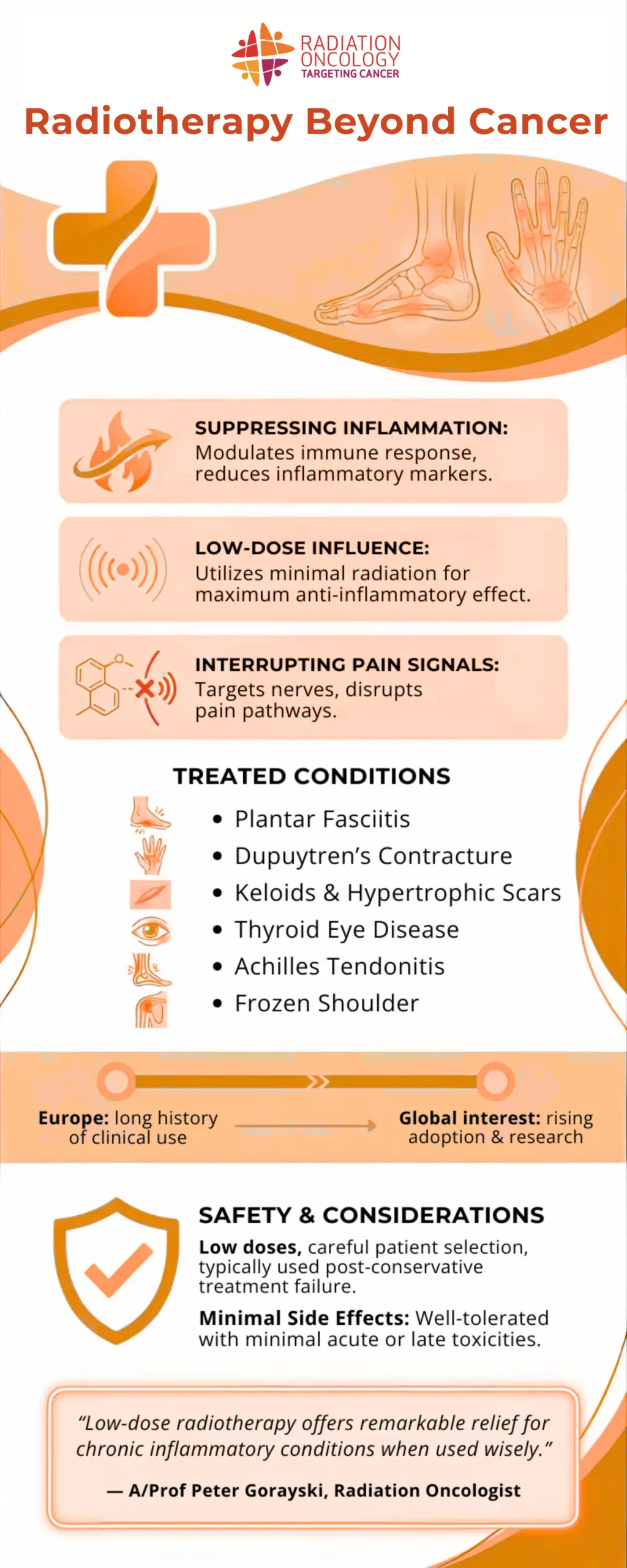
The higher radiotherapy doses used in cancer treatment are designed to damage or destroy tumour cells. At much lower doses, radiotherapy appears to work differently – influencing inflammation rather than harming tissue.
Inflammation is a common cause of ongoing pain. When tissues are irritated, the body releases chemical signals that lead to swelling and discomfort. Research suggests that very low doses of radiation can interrupt some of these signals, helping to calm the inflammatory response and allowing symptoms to ease over time.
“This low-dose radiotherapy approach is about carefully reducing inflammation to help improve comfort and movement for some patients with benign (non-cancer) conditions,” says A/Prof Peter Gorayski.
Conditions where it may be used
Because of this effect, radiotherapy has been used in some radiotherapy clinics to treat a small number of painful or inflammatory conditions, including:
- chronic heel pain caused by plantar fasciitis
- fibrous conditions of the hand and foot, such as Dupuytren’s disease and Ledderhose disease
- difficult keloid scars
- thyroid eye disease.
In many cases, treatment involves only a short course, often just a few brief visits to a radiotherapy department.
An established but lesser‑known approach
Although this may sound unfamiliar to many Australians, radiotherapy for benign (non‑cancer) disease is not new. In parts of Europe, low‑dose radiotherapy has been used for decades to treat inflammatory and degenerative conditions.
Interest in this approach has grown again in recent years as modern technology has made radiotherapy more precise than ever, allowing radiation to be delivered accurately to small areas while minimising exposure to nearby tissues.
This long‑standing experience has helped inform international guidance, including a recently published inter‑society framework developed by ASTRO, ESTRO, DEGRO and RANZCR, which outlines the evidence base, safety considerations and appropriate clinical use of radiotherapy for non‑malignant diseases.
This renewed attention was evident at the 2025 Annual Meeting of the American Society for Radiation Oncology (ASTRO), where experts discussed the expanding concept of radiation medicine – recognising that radiation can sometimes be used not only to treat cancer, but also to improve quality of life in certain non‑cancer conditions.
Safety comes first
As with any medical use of radiation, safety is central. The doses used for non‑cancer conditions are much lower than those used in cancer treatment, and doctors carefully weigh the potential benefits and risks before recommending radiotherapy.
“Low‑dose radiotherapy is usually only considered after other treatments haven’t helped and symptoms continue to affect quality of life,” says A/Prof Gorayski.
“For patients with non-cancer conditions, who have struggled with ongoing pain and inflammation despite other treatments, this century‑old therapy, used in a modern and targeted way, may help improve comfort and function.”
As research continues, radiotherapy may play a broader role in supporting quality of life, alongside its vital role in cancer treatment.
Further resources
- Radiation Therapy for Nonmalignant Diseases: An ASTRO-ESTRO-DEGRO-RANZCR Framework Radiation Therapy for Nonmalignant Diseases: An ASTRO-ESTRO-DEGRO-RANZCR Framework – International Journal of Radiation Oncology, Biology, Physics
- Royal College of Radiologists – Recommendations for using radiotherapy for benign disease in the UK
https://www.rcr.ac.uk/our-services/all-our-publications/clinical-oncology-publications/recommendations-for-using-radiotherapy-for-benign-disease-in-the-uk/
- German Society for Radiation Oncology (DEGRO) – Guideline on radiotherapy for benign diseases
https://europepmc.org/article/med/25238992